The future of B2B growth depends on integrating brand, demand, content, and sales around how modern buyers actually discover and evaluate solutions.
To build a B2B marketing engine that survives shifting buyer behaviors, leaders must look past traditional outbound playbooks and fundamentally question how their systems are structured. True, sustainable enterprise growth is not about chasing the next isolated channel; it is about aligning brand experience, demand generation, and sales into a singular, cohesive customer journey.
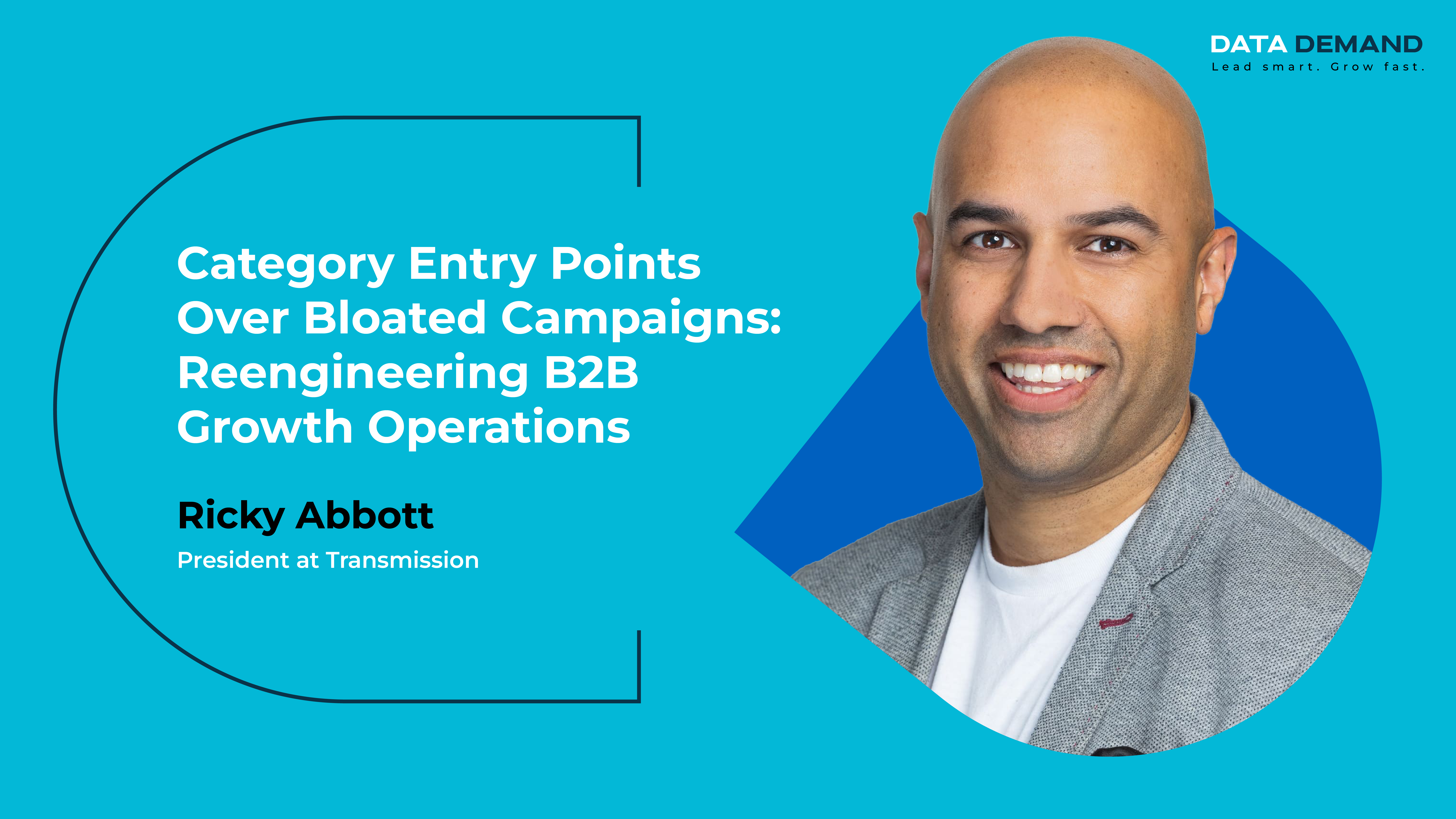
Based on Ricky Abbott’s extensive experience leading large agency operations through dramatic industry shifts, here is the 5-point strategic framework required to move your B2B operations from short-term activity to compounding business value:
Content Strategy Must Shift to AEO and GEO
Modern B2B buyers are no longer navigating linear funnels or willingly consuming dense, 20-page whitepapers. Instead, they rely on AI platforms and Large Language Models to summarize information and answer complex operational pain points directly. If your content is not structured to feed these LLMs through Answer Engine Optimization (AEO) and Generative Engine Optimization (GEO) environments, your brand becomes functionally invisible to the modern researcher. Advanced teams automate the mid-funnel content engine to free up critical budget for high-impact brand storytelling.
Replace the Megacampaign with Category Entry Points
The era of launching massive, asset-heavy corporate campaigns that require millions of media dollars and endless production cycles is over. To drive true efficiency, organizations must pivot to clearly defined Category Entry Points, building smaller, hyper-focused experiences around where they can win best. Slimmer, faster-to-produce initiatives allow brands to dominate tight niches and naturally command stronger distribution power without wasting capital on bloated frameworks.
Internal P&L Silos Fracture Customer Experience
Enterprise customer experiences remain fragmented across marketing, sales, and service because companies are fundamentally organized around product lines and internal business units. Organizations end up advertising their own internal corporate structures instead of prioritizing a unified customer journey. Modern platforms like Reddit span paid ads, community management, and AI search impact, yet traditional marketing frameworks split ownership across disconnected web, social, and media teams, ensuring no one central function owns the platform ecosystem.
Prepare for the Bursting of the B2B Creator Bubble
While the creator and peer-to-peer influencer ecosystem is delivering strong returns today, it faces a looming saturation crisis. As more individuals turn content creation into a paid career, audience trust will inevitably plummet due to over-commercialization. Sophisticated brands realize that niche influencers should only serve as an amplification tool for a core corporate philosophy, rather than acting as a brand’s solitary channel to market.
Scale the Horizontal Generalist over the Vertical Specialist
As generative AI tools commoditize basic technical execution and rapid content generation, the premium on hyper-specialized, single-discipline marketing roles is shrinking. The future belongs to integrated, cross-functional generalists who can wear multiple hats across strategy, media, and creative by leveraging AI as an operational partner. Cultivating this horizontal talent allows marketing organizations to remain agile, lean, and intensely focused on overarching business P&L efficiency.
The Bottom Line: Sustainable B2B growth is not an either-or battle between brand and demand, or content and channel; it is a systemic integration problem. Stop executing isolated, legacy marketing playbooks, and start rebuilding the engine around how modern buyers actually make decisions.
What structural silo is holding back your customer experience right now?