Growth doesn’t come from adding more tools; it comes from eliminating the friction between teams. Align sales and marketing, unify your data, and build a predictable go-to-market engine that scales.
To build a go-to-market engine that actually drives revenue, B2B leaders must stop relying on disconnected tools and fundamentally rethink their internal alignment. True commercial expansion is not about hacking growth or adding more software; it is about eliminating internal friction, establishing a shared language, and architecting a unified revenue ecosystem.
Based on the operational framework shared by Steven Lewis on the MarTech360 Podcast hosted by Samarth, here are the 5 core strategies required to transition your organization from siloed execution to a seamless GTM architecture:
1. Align Incentives to Eliminate the ‘Friction Tax’
When complexity rises, teams naturally retreat into their silos. Because marketing is traditionally compensated on lead volume while sales is compensated on margin and closed deals, the two functions often work against each other. This misalignment creates a massive ‘friction tax’ where marketing and outbound investments yield significantly lower returns. True GTM transformation starts with establishing a shared culture and a shared definition of the ideal customer.
2. Establish a Single Source of Truth for Data
Disconnected data is currently one of the biggest problems organizations face, and the rise of AI will only amplify it. When sales and marketing operate in different systems, it creates multiple versions of the truth, leading to finger-pointing instead of problem-solving. Leaders must shift toward centralized commercial data hubs or data lakes so that all revenue teams are speaking the same language and analyzing the exact same metrics.
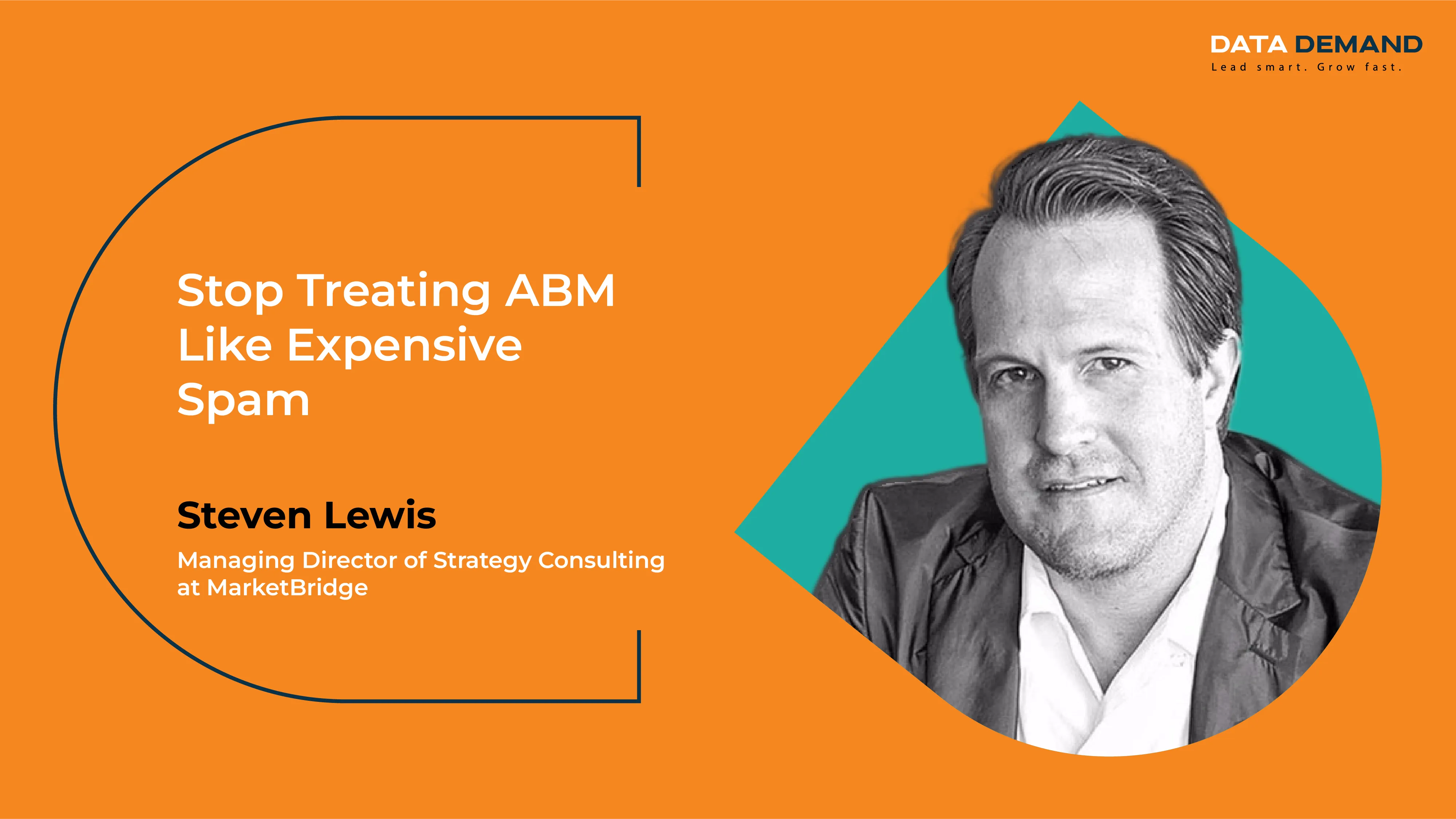
3. Stop Treating ABM Like Expensive Spam
Account-Based Marketing (ABM) is incredibly powerful, but it is currently highly under-executed across the industry. Many companies are executing ABM purely as a marketing function, reducing it to nothing more than highly targeted, expensive spam. If you are not pulling the sales team into your strategy and execution, you are not actually doing ABM.
4. Accept That the Traditional Funnel is Dead
The linear marketing funnel is dead. GTM strategies must evolve to become ecosystem-led, integrating partners, influencers, and communities into the core architecture. The focus must shift from simply figuring out how to reach a customer to understanding how to deeply connect and build long-term relationships with complex buying groups.
5. Scale Based on Predictability, Not Just Pilots
A common GTM failure occurs when companies attempt to scale before their operations can actually handle the load. True scalability requires linearity knowing that if you put one dollar in, you consistently get four dollars out. Before scaling, ensure your average sales reps can reliably hit quota and that you can handle an increase in volume without requiring massive new hiring.
The Bottom Line: A great team can win with a simple spreadsheet, but a bad team will fail even with the most expensive MarTech stack out there. Stop looking for growth hacks, and start architecting a disciplined, friction-free culture.
How much of your current GTM budget is being lost to internal friction and disconnected silos?