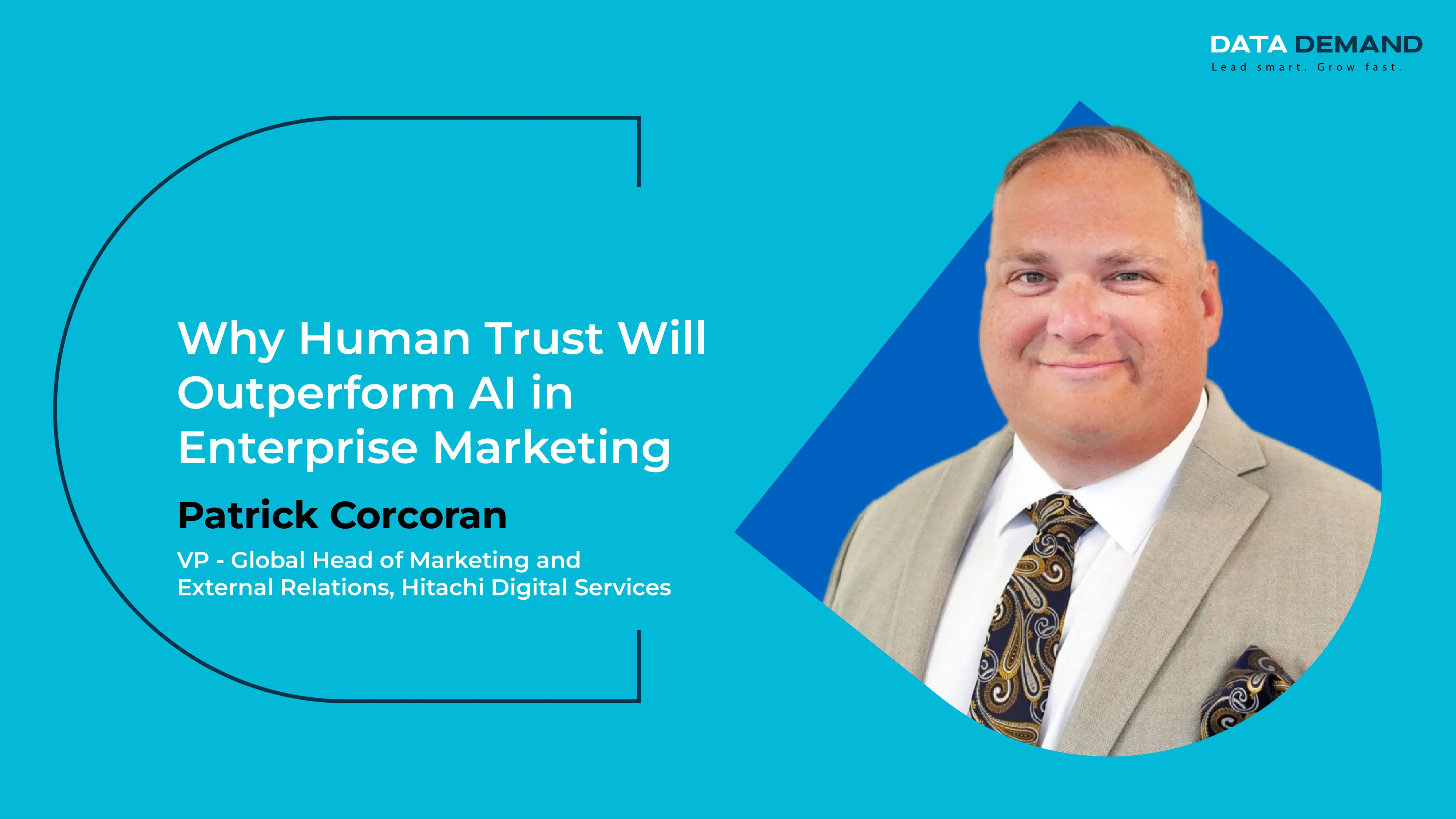
AI can accelerate marketing, but it cannot replace the trust that drives enterprise relationships. The next era of B2B growth will belong to brands that combine intelligent technology with genuine human connection.
To build a marketing engine that cuts through the noise of the AI era, B2B leaders must stop relying solely on automated production and fundamentally question how they build genuine relationships. True enterprise growth is not about letting a bot write your case studies; it is about anchoring your ecosystem in deep sales alignment, strategic partnerships, and authentic thought leadership.
Based on Patrick Corcoran’s operational framework shared on the MarTech 360 Conversations podcast with Samarth, here are the 5 core strategies required to transition your organization from a disconnected production machine to a trusted, relationship driven ecosystem:
Prioritize Human Intelligence Over Automated Production
The speed at which AI is integrating into daily marketing operations is unprecedented, but it should not replace human creativity. While AI compresses production timelines and synthesizes information, the ultimate success of the output relies heavily on the human driving the prompt. Marketing leaders must redesign roles so that AI acts as a supporting infrastructure, while human experts focus on critical thinking, prompt engineering, and ensuring the final message actually resonates with business buyers.
Step Out of the Marketing Silo and Learn Sales
A little tension between sales and marketing is healthy, but long term misalignment is fatal. To be a successful marketing leader, especially in the services industry, you must intimately understand the sales process and buying patterns. Marketers need to get out of their digital bubbles, spend time on the road with account managers, and participate in business reviews to ensure every campaign and targeted ad is perfectly aligned with the actual deal pursuit.
Treat Partner Ecosystems as a Primary Growth Engine
Partner marketing is exploding across both B2C and B2B landscapes. Leveraging a partner’s brand, resources, and expertise allows companies to bundle solutions and dramatically increase market exposure. However, successful partnerships require moving beyond basic transactional paperwork. Leaders must actively build trust with their ecosystem partners through consistent, face to face relationship building, treating them with the same care and dedication as top tier clients.
Win with Thought Leadership Before Buying Broad Advertising
Broad stroke advertising, like placing billboards in airports, only works if the audience already has a strong familiarity with your brand. For organizations trying to build enterprise awareness, generic advertising is a waste of budget. To capture the attention of high level buyers, companies must develop a stringent thought leadership practice. Delivering unique, targeted perspectives through podcasts, articles, and blogs is far more effective at differentiating a brand than generic market noise.
Lean into Authentic History and Unwavering Discipline
In an era of short term metrics and constant digital pivots, staying grounded is a massive competitive advantage. Brands like Hitachi succeed because they weave their deep, authentic history into their modern storytelling, proving stability and long term value. Furthermore, marketing leaders must remain disciplined and avoid constantly changing procedures or chasing every new trend. A grounded leader who builds a strong sense of community gives their team the safety net required to innovate confidently.
The Bottom Line: Sustainable digital growth is not about replacing your team with artificial intelligence or hiding behind digital dashboards. It is about actively getting on the road, breaking down internal silos, and building authentic human trust with your buyers, your sales team, and your partners.
How much of your current marketing strategy relies on digital automation versus genuine, face to face relationship building?