Regional digital growth is not a copy-translation problem; it is a cultural intelligence problem.
To build a marketing engine that drives exponential regional growth, enterprise leaders must look past simple language translations and fundamentally question how their brand builds cultural relevance.
True, sustainable expansion isn’t about running uniform global templates; it is about anchoring your ecosystem around localized Category Entry Points and authentic buyer behaviors.
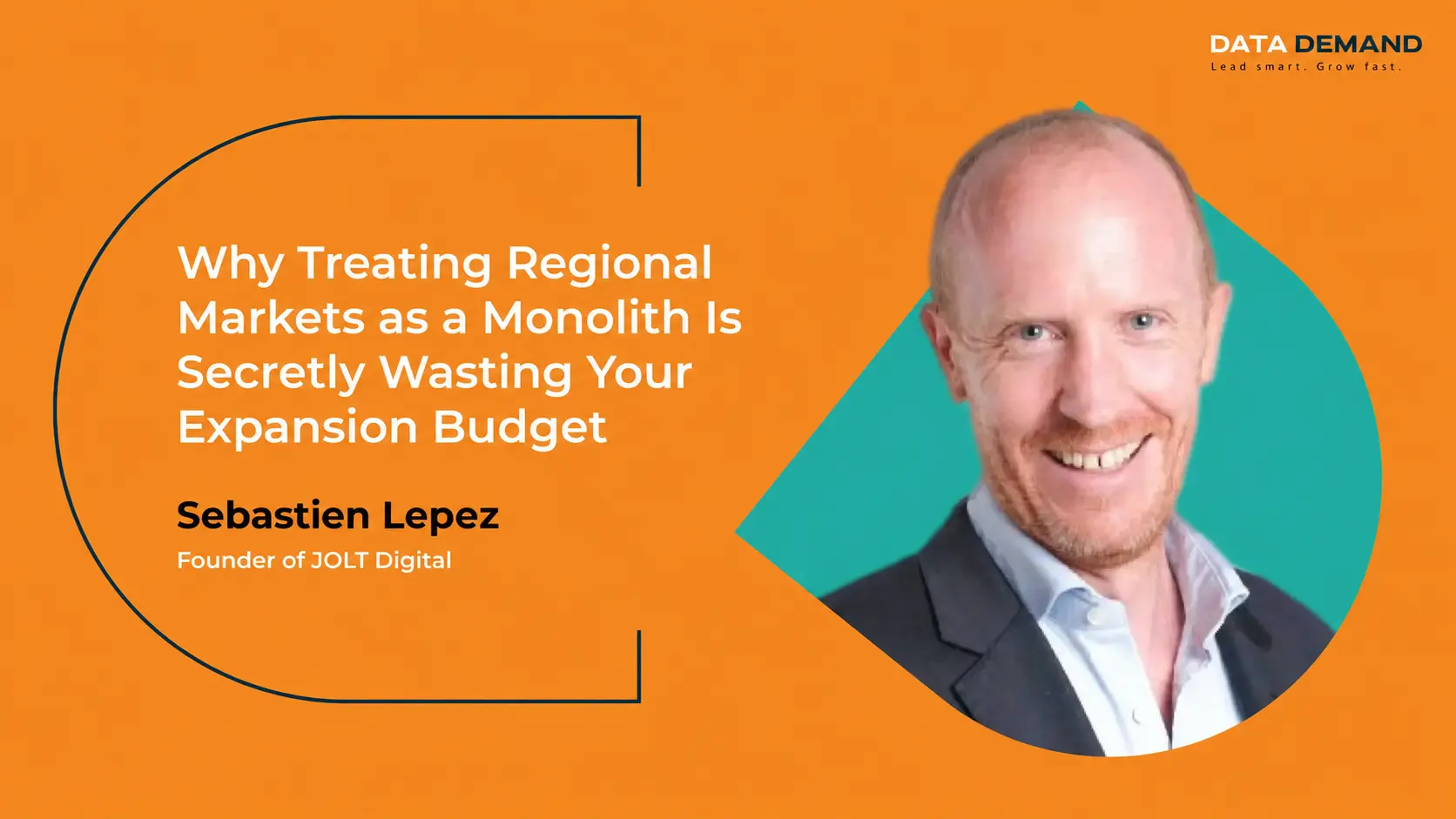
Based on Sebastien’s operational framework, here are the 5 core strategies required to move your regional go-to-market operations from generic reach to compounding pipeline:
Treating Regional Markets as a Monolith Guarantees Subpar Performance
Scaling across complex territories like APAC fails when leaders assume a single global strategy can be copy-pasted across distinct economies. Simply translating English copy into local languages ignores major variations in consumer habits, cultural nuances, and dominant digital platforms. To achieve peak campaign efficiency, organizations must customize messaging and platform choices for each specific market.
Build Demand Around Category Entry Points Long Before the Sale
Most demand generation campaigns fail because they only engage buyers when they are actively ready to transact. True market dominance begins much earlier by mapping Category Entry Points: the specific triggers, occasions, and affinities that prompt buyers to consider a solution. Brands must prioritize becoming memorable top-of-mind choices before trying to capture immediate bottom-of-funnel conversions.
Over-Indexing on Short-Term Conversion Drains Future Pipeline
Under constant internal pressure for quick sales, regional teams frequently sacrifice brand-building initiatives to chase immediate performance metrics. While driving short-term revenue is critical, relying exclusively on performance marketing depletes your future addressable pool of buyers. Sustainable growth requires balancing direct sales execution with continuous brand awareness that consistently draws new audiences into the category.
Modern B2B Strategies Require High-Impact B2C Storytelling
B2B buying decisions involve complex committees, but decision-makers remain human beings who are tired of dry corporate advertising. Modern B2B growth engines succeed by borrowing creative, emotion-driven storytelling techniques from B2C marketing. Humanizing your messaging and directly addressing real workplace pain points makes your brand cut through the clutter of professional channels.
Combine AI Velocity with Human Cultural Validation
Deploying AI tools accelerates research and asset generation, but automated production alone floods channels with generic digital noise. Furthermore, unverified AI outputs can hallucinate and miss crucial regional nuances. To break through market clutter, high-performing growth teams pair automated data processing with localized human validation to ensure messaging hits the mark.
The Bottom Line: Regional digital growth is not a copy-translation problem; it is a cultural intelligence problem. Stop running blanket performance campaigns, and start building localized demand engines around authentic buyer behavior.
How much of your regional expansion strategy is currently customized for local market buying behaviors?