Demand generation begins long before the buyer enters the funnel. It begins by shaping perception, building trust, and creating a reason to care.
To build a marketing engine that truly dominates a market, B2B leaders must look past short term dashboards and attribution models to fundamentally question how they are shaping buyer perception. True demand generation is not just about capturing people who are already ready to transact; it is about building trust, establishing familiarity, and creating categories long before the buyer enters a funnel.
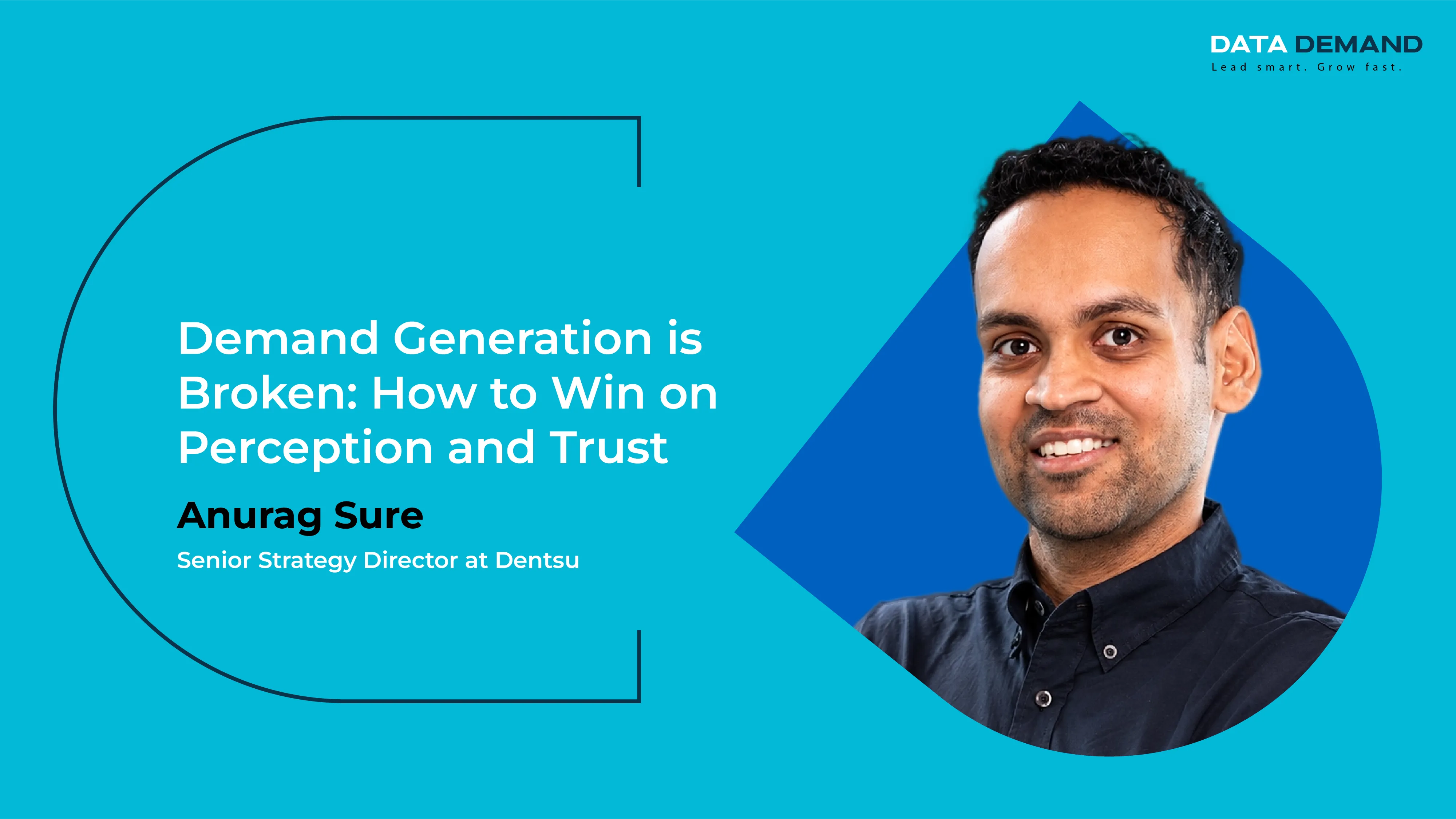
Based on Anurag Sure’s operational framework on the MarTech360 Podcast, hosted by Samarth, here are the 5 core strategies required to move your go-to-market operations from mere demand capture to true category creation:
Acknowledge that Demand Generation is Broader Than Lead Capture
Scaling digital revenue fails when companies reduce demand generation to just converting active buyers. While capturing existing demand is important, true demand generation also involves category creation. High performing brands focus on telling users about a problem they might not even know they have and positioning their innovative products as the solution. It is a larger concept about changing mindsets before an absolute conversion ever takes place.
Stop Optimizing Exclusively for What is Measurable
Under internal pressure to prove their worth to the broader business, marketing teams frequently default to optimizing only the things they can track on a dashboard. While data is essential, an unspoken truth in modern marketing is that a massive portion of impactful work simply cannot be measured. Growth requires balancing optimized, measurable campaigns with memorable brand building that creates a lasting legacy over time.
Rely on Honest Narratives to Defend Your Business
Organizing a go to market strategy around a fabricated brand story is a recipe for failure. Modern buyers have vast access to peer validation channels, like Reddit, and can easily cut through a non-true narrative. While buyers initially gravitate toward familiar narratives to build their consideration set, they ultimately remain loyal only to great products that genuinely solve their problems. Companies that fail to live by their stated values will be punished by the market.
Treat AI as an Opportunity for Quality, Not Just Volume
Deploying generative AI without a strategic filter currently floods the market with digital pollution. Because content creation has become incredibly democratized, average content is abundant. However, sophisticated growth teams realize that this era of abundance makes human intuition and high quality storytelling stand out even more. The true opportunity lies in using AI tools to scale quality content that relates deeply to the audience, rather than just pumping out baseline volume.
Think Like a Customer, Not an Audience Segment
Relying entirely on the idea of a linear buyer journey ignores reality. The most uncomfortable truth about modern marketing is that it remains largely intuition based. Data should be used to optimize and find direction, but the core skill marketers desperately need right now is the ability to think like actual customers. Growth engines require human empathy to craft experiences that align with how real people evaluate and purchase solutions.
The Bottom Line: Sustainable digital growth is not about finding the perfect attribution model; it is about building trust and familiarity in an increasingly noisy world. Stop running isolated campaigns that only target active buyers, and start building honest narratives that shape market perception from the top down.
How much of your current marketing strategy is focused on creating new demand versus simply harvesting what already exists?