Enterprise marketing is not about generating more leads. It is about creating meaningful experiences that build trust and drive revenue momentum.
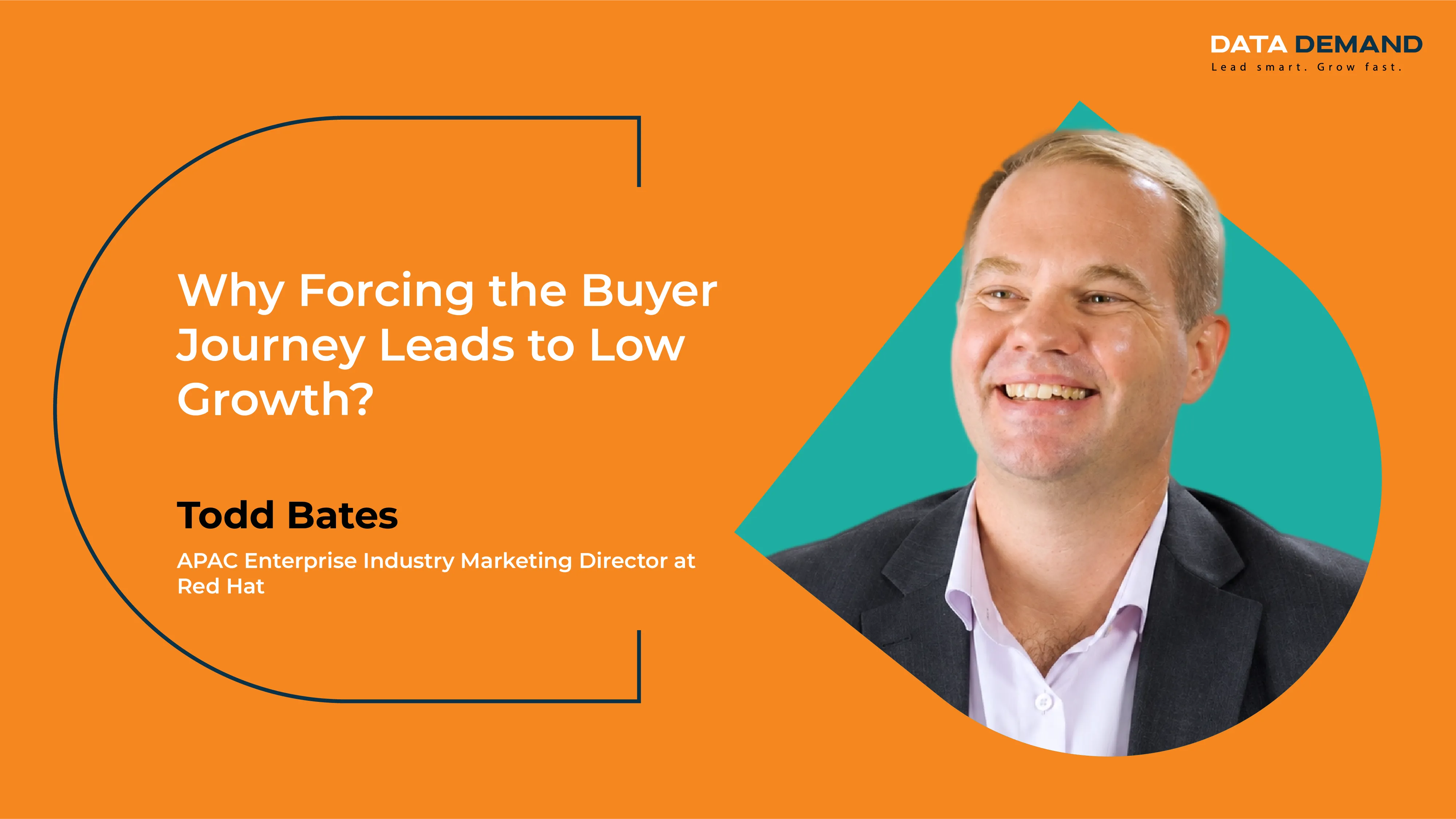
To build a pipeline that genuinely moves the needle, enterprise B2B leaders must stop confusing marketing activity with revenue momentum. Scaling an enterprise go to market strategy across complex regions is not about acquiring thousands of cheap contacts; it is about orchestrating deep, trust based account experiences. Based on Todd Bates’s operational framework shared on the MarTech 360 Podcast with Samarth, here are 5 core strategies to transition your organization from surface level lead generation to revenue accountable enterprise marketing:
Kill the Cost Per Lead Metric
Optimizing for the cheapest possible lead creates a database full of outdated contacts and switchboard numbers. In an enterprise context with multi-million dollar sales cycles, the focus must shift from acquiring arbitrary lead volumes to tracking highly relevant inquiries within a specific target account. Cost per lead hides the reality of lead quality and ultimately damages pipeline acceleration.
Evolve from Account Based Marketing to Account Based Experiences
B2B enterprise sales involve large, complex buying groups rather than single individuals. Organizations must move beyond traditional Account Based Marketing (ABM) and focus on Account Based Experiences (ABX). This requires centralizing data to understand how the entire buying committee interacts with the brand across digital channels, events, and brand activations.
Deploy AI for Predictive Intent, Not Just Email Volume
Many organizations suffer from AI washing by using generative tools simply to write faster emails. For complex 12 to 18 month sales cycles, AI should be leveraged for predictive analytics and intent data. Smart AI deployment allows marketing teams to feed LLMs with account plans and secondary research to instantly map where an account sits in the buying cycle, giving teams a massive head start on their strategy.
Keep the Human in the Loop to Preserve Trust
In diverse markets like the Asia Pacific region, business relationships are heavily reliant on long term trust. While AI can accelerate data synthesis, human marketers must remain in the loop to validate recommendations and ensure outreach remains authentic. Blindly trusting automation without human intuition risks alienating experienced buyers who can instantly spot inauthentic engagement.
Localize Global Playbooks for Regional Realities
A marketing playbook written for a uniform market like North America will fail in highly fragmented regions. Markets across APAC feature entirely different digital ecosystems, regulatory landscapes, and cultural nuances. Enterprise marketers must use standardized marketing technology to centralize data, but rely on local human intelligence to execute campaigns that resonate in distinct markets like Tokyo, Mumbai, or Singapore.
Sustainable digital growth in the enterprise space requires balancing advanced AI capabilities with deep human empathy and regional awareness. Stop chasing high volume vanity metrics and start building a localized, intelligent ecosystem that delivers genuine value to complex buying committees.
How much of your current marketing budget is spent on generating motion versus creating actual revenue momentum?