The future of AI in marketing isn’t about automating more tasks; it’s about delivering measurable business outcomes.
To build a marketing engine that thrives in the modern AI era, B2B leaders must stop focusing on basic task automation and start focusing on tangible business outcomes. True digital acceleration is no longer about deploying artificial intelligence just to save time; it is about utilizing Agentic AI to fundamentally alter how you interact with buyers and expand your market share.
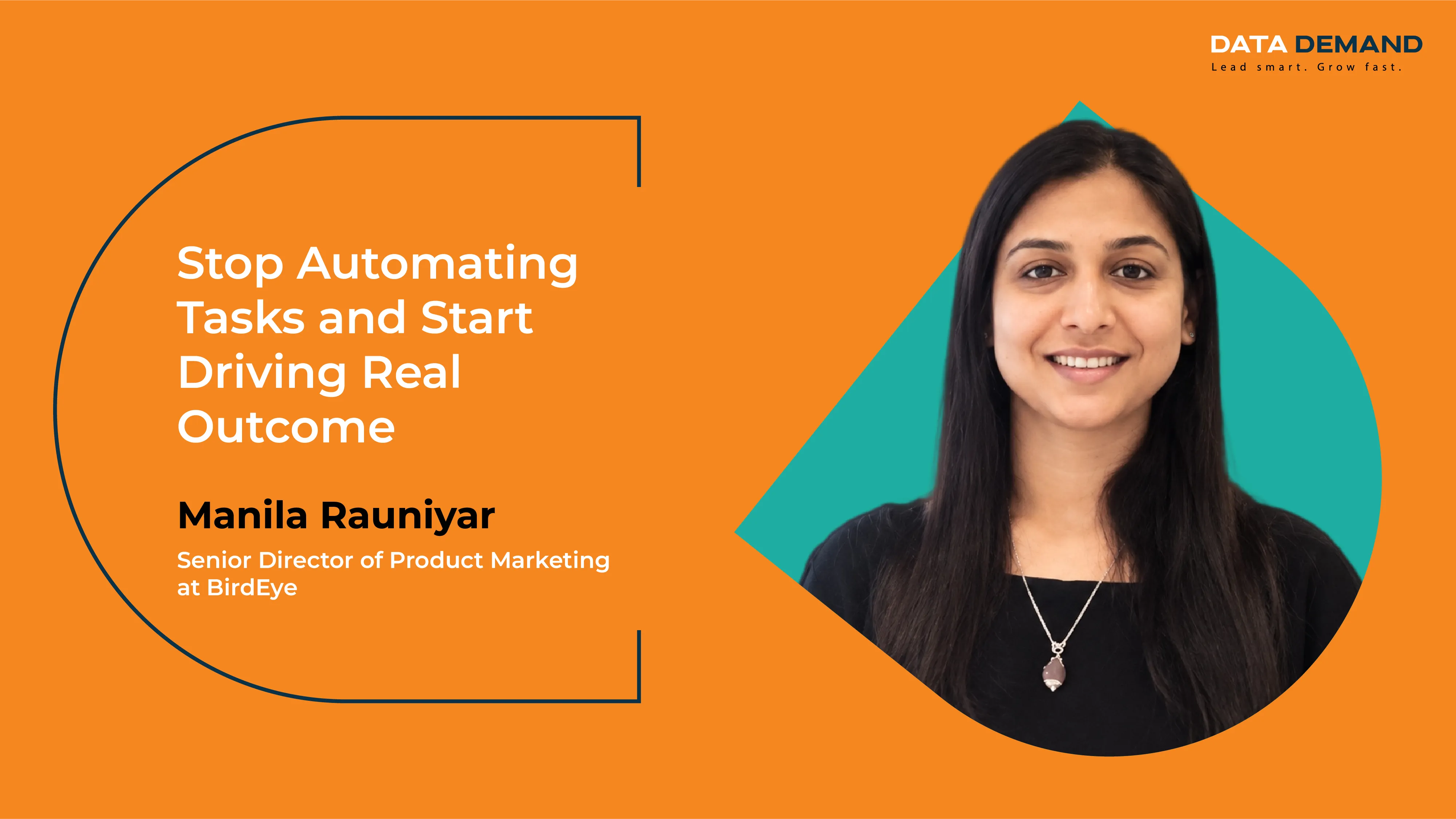
Based on the operational framework shared by Manila Rauniyar, Senior Director of Product Marketing at BirdEye, on the MarTech360 conversation hosted by Samarth, here are the 5 core strategies required to transition your organization from simple AI workflows to an outcome driven Agentic AI ecosystem:
1. Shift from Process Automation to Outcome Achievement
The divide between AI leaders and followers is becoming increasingly clear in the current market. Followers focus purely on process automation, constantly checking if an AI workflow simply functions, while true leaders use Agentic AI to drive concrete business outcomes. Leaders are working to add more context and cognition into their agents, focusing on higher success rates and actively training workloads to reduce hallucinations.
2. Stop Fearing Job Loss and Start Orchestrating
The biggest lie being told in B2B today is that Agentic AI will steal your job. While AI will take over 60 to 70 percent of tactical heavy lifting like content creation and campaign execution, it translates to job elevation rather than job loss. Marketers must evolve into managers of a digital workforce, shifting their focus to orchestrating agents, training co-pilots, and continuously feeding them the correct business context.
3. Adapt to the Rise of AI Search Engines
Modern buyers, particularly millennials, no longer want to sift through traditional search engine links; they simply want direct answers from AI engines. This massive shift in consumer behavior forces marketers to completely rethink the discovery phase of the buyer journey. Brands must pivot their strategies to ensure that these new AI answer engines are accurately learning about them and correctly perceiving their brand statements.
4. Anchor Product Strategy in Real Market Intelligence
Building a product marketing strategy based on hunches or cutting corners to meet strict deadlines inevitably leads to failed launches. Agentic AI relies heavily on continuous, real-time market intelligence to function properly. Marketers must anchor their strategies in rich demand signals like reputation, customer sentiment, and AI visibility to fuel hyper-personalized campaigns and accurate agentic decision making.
5. Demand Concrete ROI Beyond Basic Time Savings
While traditional AI adoption has been measured by basic efficiency metrics like time saved, the maturity of Agentic AI demands a much higher standard. As organizations begin purchasing Agentic AI for actual outcomes rather than just process improvement, ROI discussions must become highly tangible. Leaders should expect concrete deltas in their sales and marketing pipelines, customer satisfaction scores, and overall business expansion.
The Bottom Line: Sustainable digital growth is not about finding tools that write faster emails; it is about deploying Agentic AI to drive measurable business outcomes. Stop treating AI as a basic automation tool, and start managing it as a highly intelligent digital workforce.
How much of your current AI strategy is focused on process efficiency versus actual revenue outcomes?