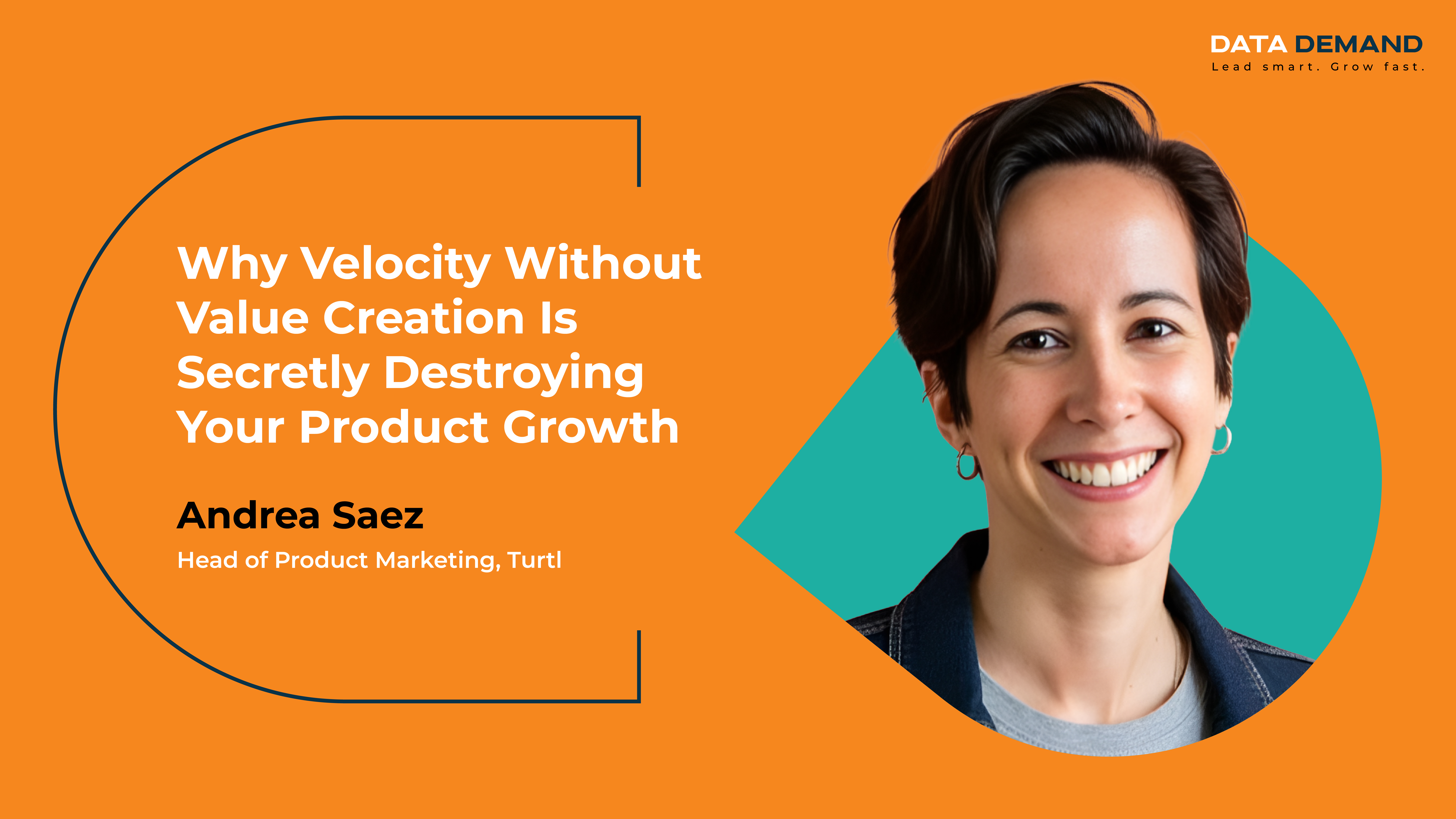
The strongest takeaway from the article is that product velocity alone does not drive growth, user adoption and validated value do.
To build a product engine that drives exponential business value, executive leaders must look past basic activity metrics and fundamentally question how their teams validate customer needs.
True, sustainable digital growth isn’t about shipping code faster; it is about aligning cross-functional teams around measurable user behaviors and proven value creation.
Based on Andrea’s operational framework, here are the 5 core strategies required to shift your product organization from endless shipping to compounding business momentum:
Stop Confusing Raw Velocity with Market Momentum
The most persistent myth in product development is that ‘moving fast and breaking things’ automatically accelerates growth. Constantly launching new features without driving actual adoption is merely motion, creating a self-perpetuating cycle of wasted engineering effort. True product momentum occurs only when your roadmap directly encourages specific user behaviors that deliver validated, compounding value.
Eliminate Strategic Misalignment via a Value Creation Plan
Operating in functional isolation creates severe friction across the enterprise. When product teams build one thing, marketing promotes another narrative, and sales promises unbuilt features, organizational momentum stalls. Leaders must bring commercial, engineering, and executive teams together around a unified Value Creation Plan (VCP) to establish explicit agreement on buyer problems and target behaviors.
Shift from Founder Intuition to Evidence-Led Scaling
The operational playbook that takes a company to its initial revenue milestones fails when scaling past 10 million dollars. As organizational layers expand, leadership loses direct, daily contact with users, rendering past assumptions obsolete. Transitioning to enterprise scale requires self-awareness, delegating market research, and making critical roadmap decisions based on hard customer evidence rather than gut instinct.
Embed Strategic Product Marketing at Problem Conception
Treating product marketers as tactical copywriters who receive a brief right before launch destroys go-to-market performance. Product marketers serve as the primary translators of market value and user behavior. To build cohesive go-to-market motions, strategic PMMs must sit in the room from the moment a customer problem is selected, tracking decisions months before a feature goes live.
Challenge Executive Bias by Relentlessly Asking Why
Chasing feature parity with competitors or building integrations based on internal echo chambers wastes immense organizational resources. Assuming that a competitor knows something you don’t leads to copying the wrong roadmap. Sustainable scaling requires teams to slow down, challenge internal confirmation bias, and mandate verified user research before committing engineering resources.
The Bottom Line: High-velocity feature shipping without user adoption is just expensive noise. Stop chasing pure operational motion, and start aligning your cross-functional teams around evidence-based product momentum.
Is your organization currently tracking leading behavior metrics or relying strictly on lagging churn data?