Performance captures today’s demand, but brand creates tomorrow’s. Sustainable growth comes from building a marketing ecosystem where the two multiply each other.
To build a marketing engine that drives sustainable growth, leaders must stop treating media, creative, and data as separate departments. True digital acceleration is not about choosing between brand awareness and immediate conversions; it is about unifying your entire ecosystem so that brand equity actually multiplies your performance results.
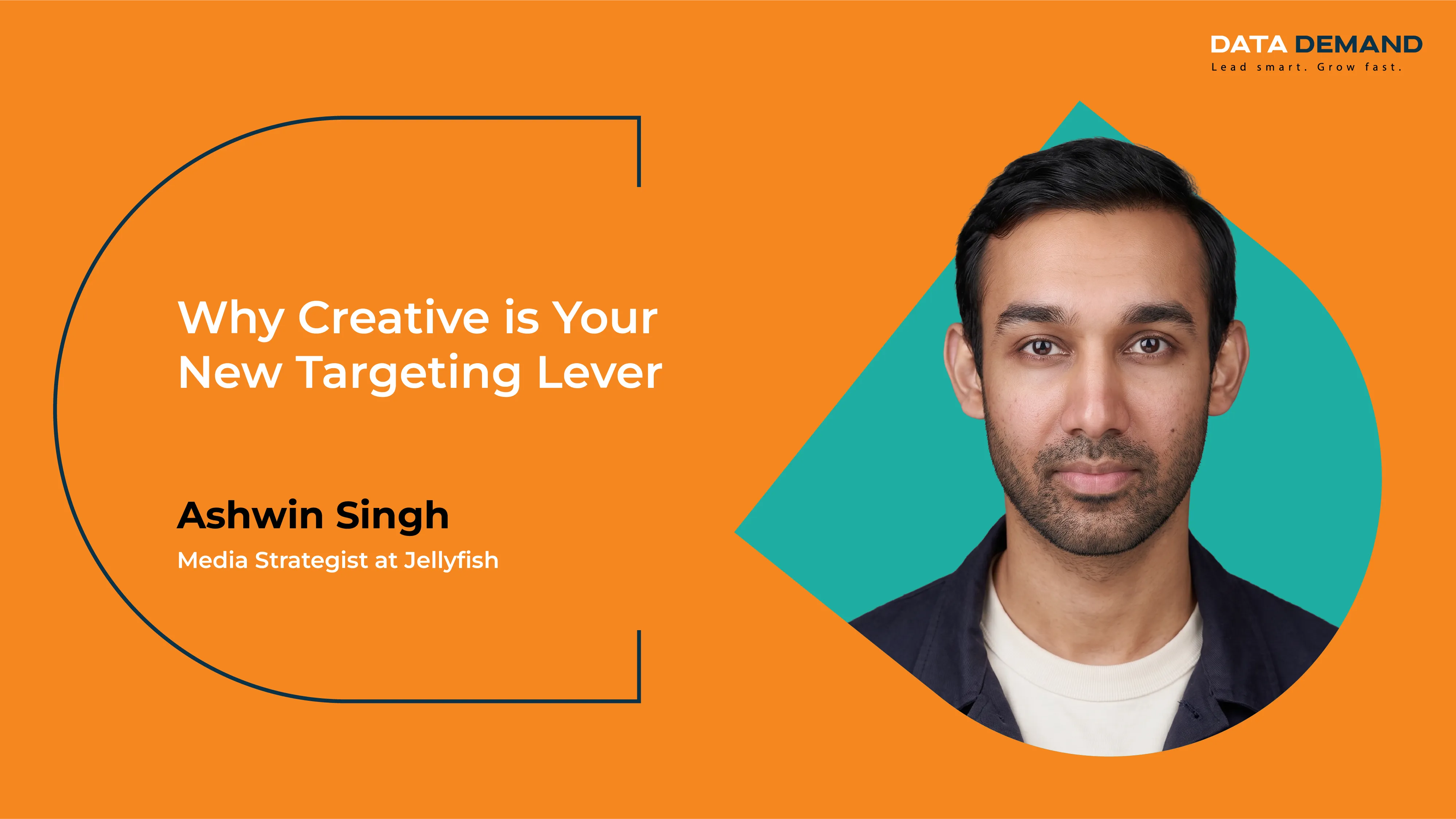
Based on the operational framework shared by Ashwin Singh, Media Strategist at Jellyfish, on the MarTech 360 Conversations podcast hosted by Samarth, here are the 5 core strategies required to break through a performance plateau and outmaneuver your category:
1. Stop Fighting the False War Between Brand and Performance
CFOs often demand immediate, trackable ROI, pushing teams into a performance only trap. However, performance marketing only captures existing demand, while brand building creates future demand and mental availability. If you only run performance ads, you will eventually exhaust your pool of ready buyers and face rising acquisition costs as you are forced to reach lower intent users.
2. Relinquish Manual Campaign Control to AI
In the old world of media planning, success relied on hacking granular audience segments and pulling manual bidding levers. Today, AI driven campaigns are infinitely smarter at finding the next conversion and matching the right creative to the right user. Marketers must unlearn manual control and instead focus their human value on orchestrating the broader funnel journey and feeding the algorithm with diverse assets.
3. Treat Creative as Your New Targeting Lever
With strict privacy regulations and the rise of AI campaigns like Advantage Plus and Performance Max, manual targeting is disappearing. Because algorithms now rely on broad targeting, the AI uses your creative to figure out who to look for. When an asset stops the scroll for a specific type of user, the algorithm automatically goes out and finds thousands more people just like them.
4. Test Psychological Persuasion Drivers
Traditional A/B testing often wastes time on arbitrary changes, like swapping a single word or background color. High intent creative should be built around behavioral science and specific psychological triggers, known as persuasion drivers. By testing concepts like social proof, authority bias, or loss aversion, you gain powerful insights into human psychology that can fuel your next creative brief or generative AI prompt.
5. Escape the Last-Click Attribution Trap
The industry still relies on last-click attribution because it offers a clean, easily defensible number, even though it heavily over credits paid search. Teams must move beyond this measurement trap. Using directional insights from geo-holdout tests or adopting Media Mix Modeling helps brands make smarter budget allocation decisions without letting perfection become the enemy of progress.
Sustainable digital growth is not about choosing between brand and performance; it is about creating a unified ecosystem where creative dictates targeting and brand drives long term efficiency. Stop manually hacking campaigns, and start building high intent assets that actually persuade your buyers.
How much of your current marketing budget is trapped in last-click performance channels that are reaching their natural saturation point?