Stop chasing cheap leads and start investing in meaningful buyer relationships.
To build a go-to-market engine that actually converts, B2B marketing leaders must stop treating demand generation as a numbers game and fundamentally question the intent behind their leads. True commercial expansion is not about blasting out white papers to fill the top of the funnel; it is about building deep trust and orchestrating one-to-one conversations with actual human buyers.
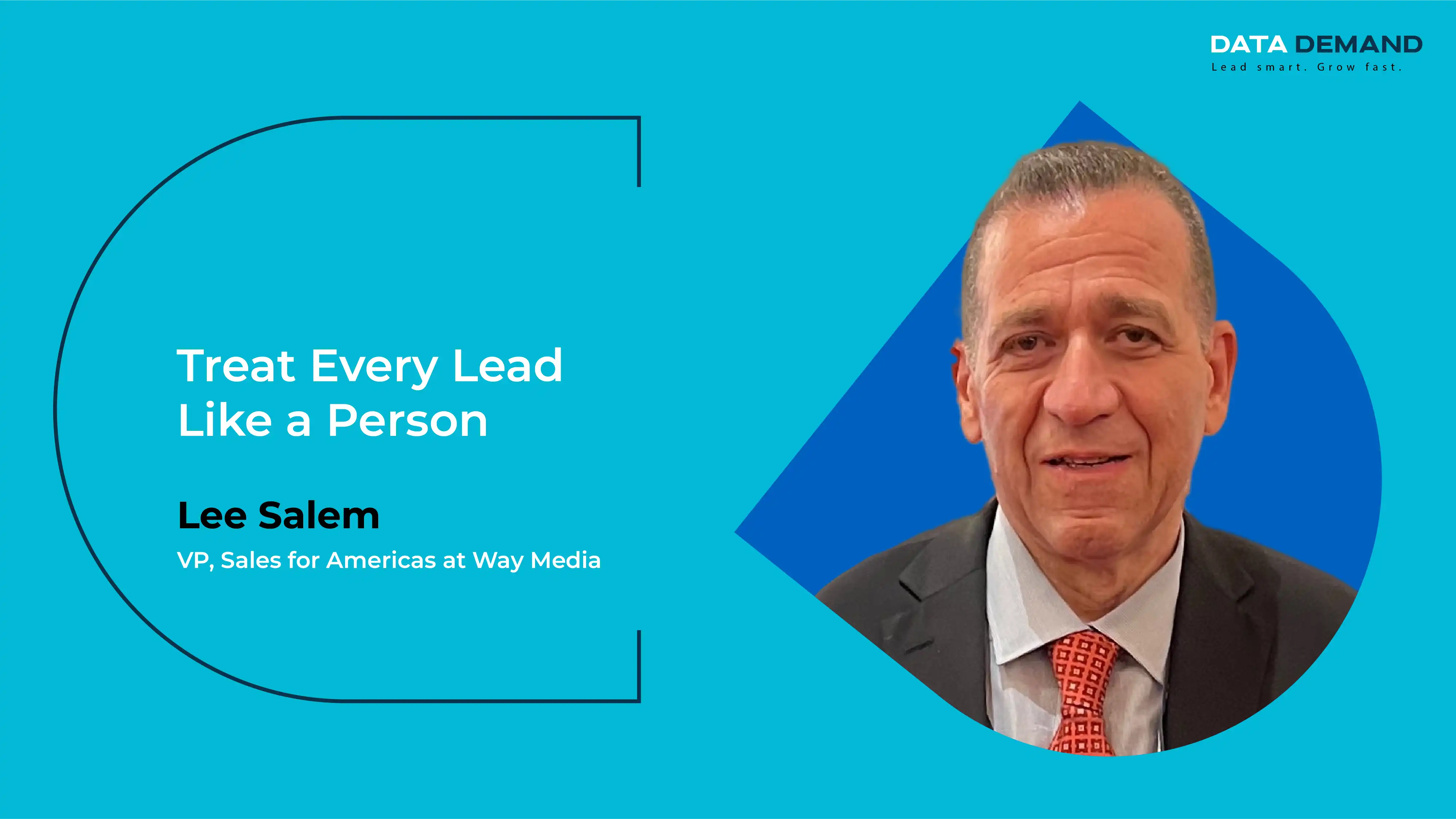
Based on the operational framework shared by Lee Salem, Vice President of Sales for Americas at Way Media, on the MarTech360 podcast hosted by Samarth Bhargava, here are the 5 core strategies required to transition your organization from vanity metrics to a trust-driven demand ecosystem:
Remember That Every Lead is an Actual Person
Many marketers operate as if leads are just email addresses on a spreadsheet. True demand generation must evolve beyond merely collecting downloads from case studies or webinars. Marketers must remember that behind every cold call and email is a human being whose time and attention must be respected. You must strive to create highly relevant, one-to-one connections rather than just spraying the market with generic collateral.
Never Buy Leads Based Solely on Cost Per Lead (CPL)
When choosing a demand generation vendor, organizations frequently make the fatal mistake of optimizing entirely around the lowest Cost Per Lead. Low-cost leads almost always indicate poor data quality, unrefreshed third-party lists, or outright bad actors who poison the well for the rest of the industry. Instead of prioritizing cheap volume, leaders must evaluate vendors based on data cleanliness, transparent operations, and a strong industry reputation.
Run Away from ‘Guaranteed’ ROI Promises
The biggest myth in demand generation is that anyone has a magical formula for fast returns. If a vendor promises you ‘fast ROI’ or ‘guaranteed leads’ that will definitely buy, you should run the other way. Vendors have zero control over your internal sales cycles, your team’s ability to convert, or the timeline of the actual buyer. Honest partners set realistic expectations rather than relying on hyperbolic buzzwords like ‘game-changer.’
Demand Total Process Alignment Before You Sign
Even if a vendor has clean data and a great reputation, the relationship will fail if their processes do not align with your internal systems. A demand generation partner must deeply understand your specific Ideal Customer Profile (ICP) and exactly how your sales team intends to use the leads. Without this operational alignment, marketing simply throws leads over the wall, and the sales team ignores them.
Always Run a Test Before Making a Major Commitment
Never enter into a massive demand generation contract based purely on a sales pitch or a fancy dinner. The most crucial piece of advice for onboarding a new vendor is to test their capabilities with a smaller commitment first. Ask for relevant case studies from companies in your specific region or industry to prove their concept, test the initial response quality, and ultimately, trust your gut instincts.
The Bottom Line: Sustainable digital growth requires abandoning the illusion of cheap, high-volume leads and prioritizing deep alignment and trust. Stop falling for hyperbolic sales pitches, and start building demand generation programs that treat buyers like human beings.
How much of your current demand generation budget is being wasted on cheap leads that your sales team refuses to call?