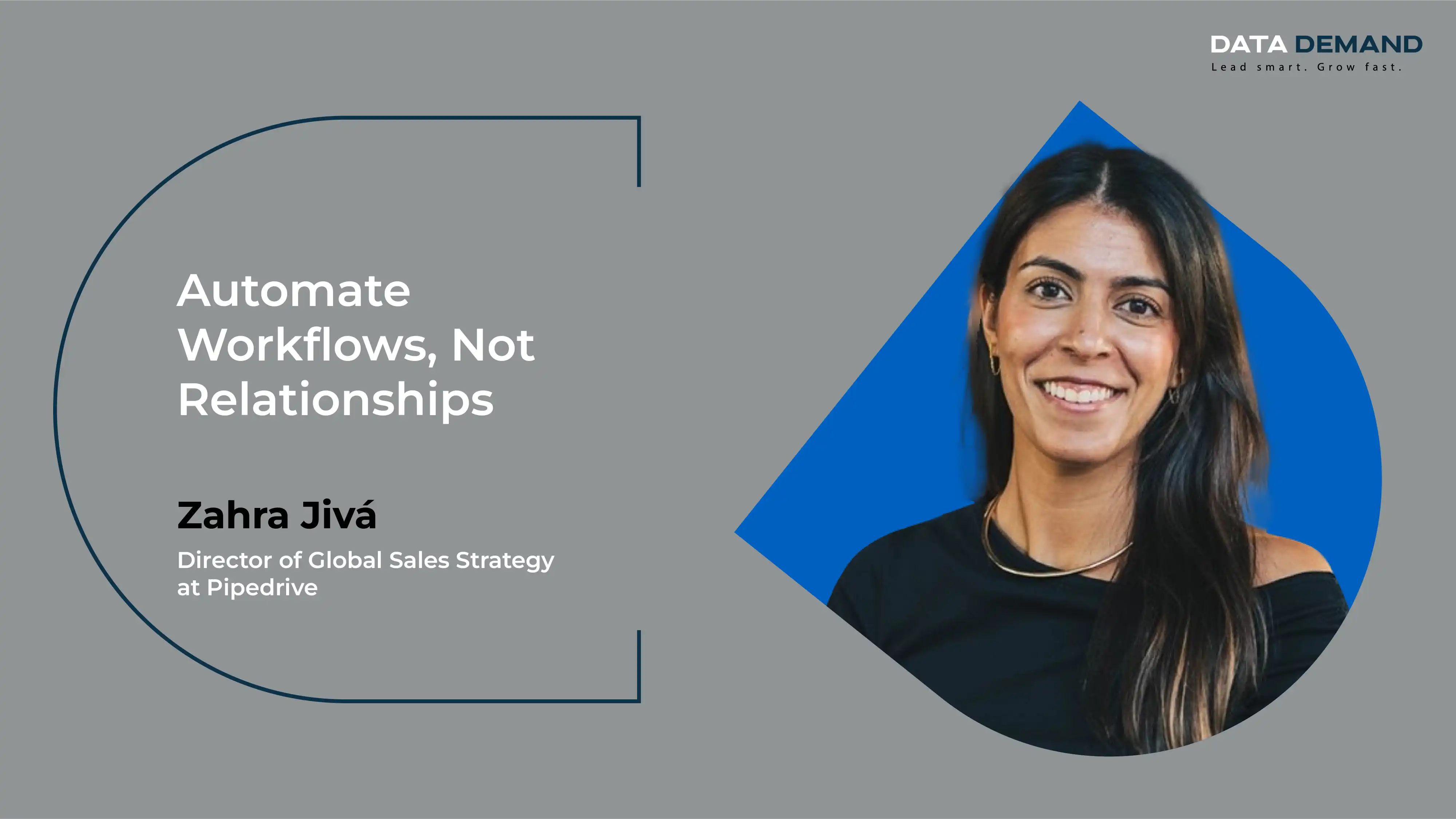
Automate the workflows, not the relationships that drive revenue.
To build a high-performing sales engine, B2B leaders must stop chasing pure automation and fundamentally rethink how they balance artificial intelligence with authentic human connection. True revenue growth is not about blasting automated messages across LinkedIn; it is about using data and CRM platforms to create efficiencies so your team can focus on active listening and building genuine rapport.
Based on the operational framework shared by Zahra Jivá, Director of Global Sales Strategy at Pipedrive, on the MarTech 360 podcast hosted by Samarth Bhargava, here are the 5 core strategies required to transition your sales organization from chaotic automation to a people-first, data-driven ecosystem:
Let AI Handle the Workflows So Humans Can Handle the Relationships
While artificial intelligence is incredibly powerful, it must be viewed as a tool to support your sellers, not replace them. The true value of AI lies in automating repetitive daily tasks, such as sending contract renewal reminders or using lead scoring to prioritize outreach, so that sales professionals can dedicate their energy to building trust and rapport with customers.
Prioritize Active Listening Over Aggressive Selling
A successful sales conversation is not about proving you have all the answers. The most underrated soft skill in modern sales is active listening. Salespeople must enter interactions with genuine curiosity, seeking to understand the customer’s specific pains and challenges before ever offering a recommendation or a pitch.
Build a ‘People-First’ Sales Culture
High-performance sales cultures are rooted in the well-being and growth of the team. Leaders must foster an environment where individual success is explicitly tied to team success, emphasizing that they are ‘one team.’ This means actively coaching employees toward their personal growth goals, ensuring they take their paid time off, and hiring individuals who are genuinely passionate about the product they are selling.
Stop Spamming and Start Analyzing Your Ideal Customer Profile
The days of sending dozens of generic cold messages on LinkedIn with a zero percent response rate are over. To effectively utilize social selling, teams must use advanced AI tools to analyze and predict the right segments and Ideal Customer Profiles (ICPs) for their business. Real-time data enrichment ensures that sales reps are targeting the right executives rather than wasting time on outdated leads.
Evaluate Calls Against a Standardized Framework
To scale a sales team effectively, organizations must establish a standardized process and measure performance against it. Utilizing AI to score customer interactions against proven frameworks such as ACE or SPICED allows leaders to objectively determine who needs coaching. By combining these AI interaction scores with CRM conversion data, organizations can definitively identify whether stalled deals are a coaching issue, a team issue, or a product issue.
Sustainable commercial growth requires recognizing that even the most advanced CRM is useless without a dedicated, empathetic sales team. Stop trying to automate every aspect of the sales journey, and start empowering your team to build meaningful, human connections.
How much of your current sales strategy relies on automated outreach rather than targeted, active listening?